
The Strategy Fit Audit: Which Approach Matches How You Think?
Most traders pick a strategy based on what they've seen on YouTube. This audit helps you choose one based on something more reliable: how your brain actually works.

Learning Path Stage 6: Find Your Strategy
Learning Level 6: Adaptation
Primary Learning Objective
By the end of this lesson, you will be able to assess your own cognitive style, risk tolerance, and time availability against the demands of different trading strategies.
Most traders pick a strategy the way most people pick a gym membership. They choose based on what looks impressive, what a friend recommended, or what showed up first in a YouTube search. Then they wonder why they can't stick to it.
The problem is almost never the strategy. Strategies that have been around for decades — ORB, trend following, supply and demand, VWAP-based approaches — generally work well enough in the right hands. The problem is usually fit. A strategy that suits one person's cognitive style, emotional makeup, and daily schedule can feel completely unworkable to someone else, even if both traders are equally skilled and equally disciplined.
This is a genuinely underexplored idea in trading education, possibly because it's easier to sell a strategy than to help someone figure out which one belongs to them. So this audit exists to do the slower, less marketable thing: help you understand how you actually think, what you can actually tolerate, and which trading approaches are likely to align with both.
This is not a quiz with a tidy outcome. It's a framework for honest self-assessment. Work through it carefully, and you'll come away with a clearer picture of where to focus your energy.
Before You Start
Two important notes.
First, this audit works best after you've done some trading — even paper trading. If you've never experienced the feeling of watching a position move against you, or the specific restlessness of waiting for a setup that won't appear, some of these questions will be hard to answer honestly. If you're brand new, come back to this after a few weeks in replay mode.
Second, there are no good answers or bad answers here. The goal is not to identify what you should want to be. It's to identify what you actually are, so you can stop fighting yourself.
Part One: The Eight Dimensions
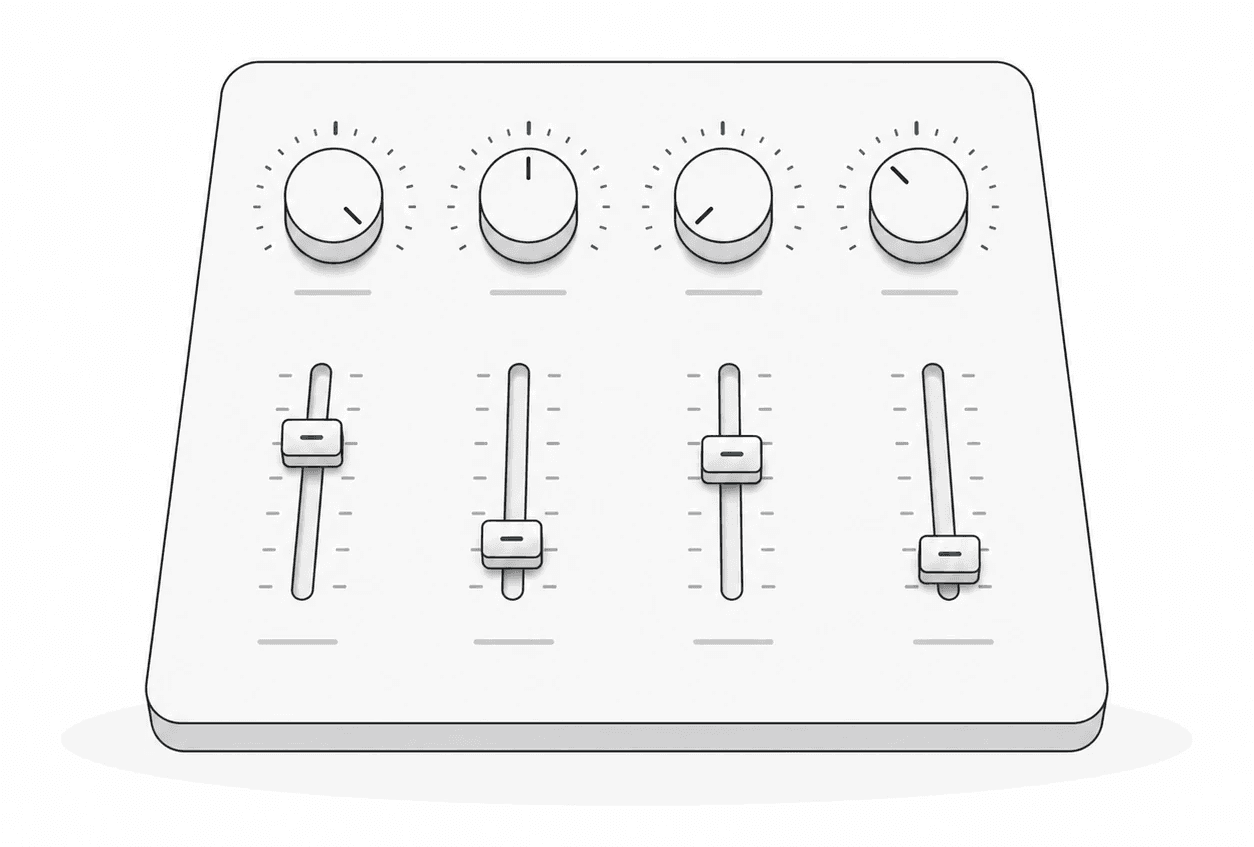
Rate yourself on each dimension honestly. Use the full range — most people cluster in the middle out of modesty, which makes the results less useful.
Dimension 1: Patience Tolerance
How long can you comfortably wait for the right conditions?
Consider: how do you feel when a setup you've been watching doesn't trigger? When you sit in front of a chart for two hours and nothing presents itself? When you've identified a level and price refuses to reach it for days?
1 — Waiting feels actively uncomfortable. I need something to be happening.
5 — I can wait, but extended inactivity starts to wear on me after a while.
10 — I genuinely don't mind waiting. The right setup is worth however long it takes.
Your score: ____
Dimension 2: Need for Action
How much stimulation does trading need to provide?
This is related to patience but different. Some people come to trading because the intellectual puzzle interests them. Others come because they want to be in the market — participating, reacting, deciding. Neither is wrong, but they pull toward very different approaches.
1 — I want to be active. Multiple decisions per session is the point.
5 — I like some action but I'm not restless if a session is quiet.
10 — I'm fine making one good decision and being done. I don't need more than that.
Your score: ____
Dimension 3: Rules vs. Discretion
Do you perform better with a strict checklist, or do you prefer reading the situation?
Some traders work best when their system is clearly defined: if A, B, and C are present, take the trade. Full stop. Discretion feels like a liability to them — it introduces too many variables. Others find rigid rules suffocating, and perform better when they can weigh the overall context and make a judgment call.
1 — I want clear rules. If the criteria are met, I execute. I don't want to deliberate.
5 — I like a framework, but I want some room to interpret what I'm seeing.
10 — I need discretion. I want to weigh the full picture and decide, not just check boxes.
Your score: ____
Dimension 4: Drawdown Tolerance
Can you sit with price moving against you without it affecting your judgment?
This is one of the most important dimensions and one of the hardest to assess honestly before you've experienced real drawdowns. Think about the last time you were in a paper trade that moved against you. Or the last time a position you held looked like it was heading for the stop. What happened to your thinking?
1 — I find it very difficult. I want to exit or adjust before the stop is hit.
5 — I can tolerate moderate movement against me if the thesis still holds.
10 — Price moving against me doesn't change how I feel about the trade. I wait for invalidation.
Your score: ____
Dimension 5: Time Availability
How much time can you realistically give to trading?
Be honest about this one. Not aspirationally honest — actually honest. How many hours per day can you sit in front of a chart without it conflicting with work, family, health, or sanity? This question matters a great deal because some strategies require active management for hours at a time, and others are built around checking in for a few minutes.
1 — I have very limited time. An hour or less per day, reliably.
5 — I can give a few hours on most days if I structure it.
10 — I have significant time available and trading can be my primary focus during market hours.
Your score: ____
Dimension 6: Screen Time Preference
How do you feel about watching charts for extended periods?
This is different from time availability — it's about preference and sustainability. Some people find chart-watching genuinely engaging and could do it for hours. Others find it draining, and feel better with a system that limits their screen time by design.
1 — Extended chart-watching drains me. I want to set it and step away.
5 — I can handle significant screen time, but I'd rather not have it be the whole session.
10 — I like being in the charts. Watching price move is interesting, not exhausting.
Your score: ____
Dimension 7: Decision Speed
Do you make better decisions quickly, or when you've had time to think?
Some traders freeze when forced to decide in seconds. Others make worse decisions when they have too long to think — they second-guess, over-analyze, and talk themselves out of good setups. Be honest about which direction you tend to err.
1 — I need time to think. Fast decisions under pressure don't go well for me.
5 — I'm comfortable in both modes, depending on the situation.
10 — I do better with fast, clear decisions. Too much time to think is a problem.
Your score: ____
Dimension 8: Complexity Preference
Do you want a simple, repeatable system or a nuanced, context-dependent framework?
Some people find simplicity reassuring. A strategy with three clear criteria, applied the same way every time, feels solid. Others find simplicity boring or insufficient — they want a framework rich enough to account for different market conditions, different contexts, different types of setups. Both preferences are valid. Both also have failure modes.
1 — I want simplicity. Fewer variables means fewer things to get wrong.
5 — I like some complexity but not so much that it becomes paralyzing.
10 — I find nuanced, layered frameworks more interesting and more useful than simple rules.
Your score: ____
Part Two: The Five Profiles
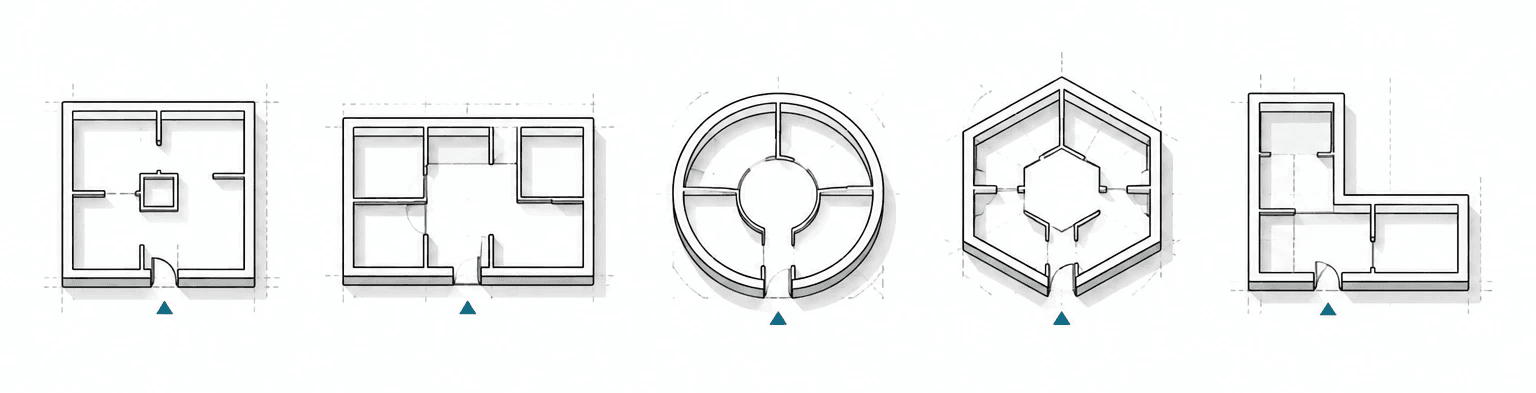
There's no scoring formula here that spits out a single answer. Instead, look at your scores as a pattern and compare that pattern to the profiles below. Most people will see themselves clearly in one or two of them.
The Systematic Executor
Profile: Low patience tolerance (1–3), high need for action (1–3), strong rules preference (1–3), and moderate-to-high screen time availability.
You function best within environments that generate frequent, unambiguous setups governed by explicit rules. Waiting for hours for a single macro development is not your strength, and frankly, within this framework, it does not need to be. The objective is to identify a methodology that accommodates this baseline rather than fighting it. Extended periods of forced inactivity will almost certainly tempt you into manufacturing trades out of sheer restlessness. This is a behavioral trap that stands as one of the most reliable failure modes in early trading.
Likely Strategy Fit: Scalping, opening range breakouts (ORB), and highly structured intraday approaches with rigid entry criteria. These strategies reward swift decision-making and favor frequent setups. Crucially, they are rule-based enough to strip away the heavy layers of manual discretion that typically invite emotional friction.
The Behavioral Blindspot: Overtreading. The exact psychological makeup that qualifies you for high-frequency execution also renders you vulnerable to forcing setups when the market is simply flatlining. A trading session with zero valid setups must still result in zero executed trades.
The Analytical Observer
Profile: High patience tolerance (7–10), low need for action (7–10), preference for discretion (5–10), high complexity preference (7–10).
For you, the market is less of a battlefield and more of a complex, compressed behavioral puzzle. You are entirely comfortable sitting on your hands. You do not experience an ambient need for constant market activity; instead, you require contextual alignment, and you are perfectly willing to wait out the noise to find it. Imposing rigid, binary rules onto your process can feel suffocating because your brain naturally wants to account for macroeconomic context, higher-timeframe structures, and subtle market shifts.
Likely Strategy Fit: Supply and demand zones, Smart Money Concepts (SMC), and multi-timeframe structural analysis. These frameworks reward deep study, conceptual thinking, and the patience required to wait for high-probability setups. They possess steep learning curves and significant cognitive complexity—traits that tend to engage your interest rather than deter you.
The Behavioral Blindspot: Analysis paralysis. The same cognitive tendency toward nuanced thinking that makes you excellent at macro structural analysis can completely lock you up when it is time to actually pull the trigger. High complexity is an intellectual playground, but it is not a license to deliberate indefinitely while the opportunity passes by.
The Structured Range Trader
Profile: Moderate patience tolerance (4–7), strong rules preference (1–4), moderate action need (3–6), moderate drawdown tolerance.
You like defined levels and clear rules. You're not restless, but you're not exceptionally patient either — you prefer knowing what you're looking for and acting when you find it. Highly discretionary approaches feel uncomfortable because there's too much room for your own judgment to undermine you. Highly complex frameworks feel like too much to manage simultaneously.
Likely strategy fit: Range trading, support and resistance approaches, VWAP-based strategies. These approaches work well with defined levels, reward rule-following, and don't require long holding periods or extended waiting.
Watch out for: Fighting the trend. Range trading works beautifully in ranging conditions and is a reliable way to give back profits when the market transitions to a trend. Part of your development will be learning to recognize when the range is no longer a range.
The Trend Follower
Profile: High patience tolerance (7–10), high drawdown tolerance (7–10), low action need (6–10), low-to-moderate screen time preference.
You're not in a hurry. You understand that a trend can take days or weeks to develop and you don't need to be in it from the very beginning. You can hold a position while price moves against you, provided the larger trend structure remains intact. Extended screen time doesn't appeal to you particularly — you'd rather identify a move, get positioned, and check in periodically.
Likely strategy fit: Swing trading, trend following, EMA-based trend systems, session-based approaches on higher timeframes. These strategies reward patience over activity and suit people who don't need frequent feedback from the market to stay confident in a position.
Watch out for: Missing entries. Patience is a genuine edge, but it can curdle into waiting for a perfect entry that never quite appears. The willingness to hold through noise must be balanced with the willingness to actually enter.
The Reactive Decision-Maker
Profile: High decision speed (7–10), high screen time preference (7–10), moderate rules preference, moderate action need.
You think well under pressure and find fast-moving market conditions clarifying rather than stressful. You don't freeze — you process quickly and act. Slow, deliberate frameworks feel disconnected from what's actually happening in front of you.
Likely strategy fit: News trading, momentum strategies, breakout approaches with fast-moving entries. These reward fast processing and quick execution. They're also unforgiving of hesitation, which is less of a concern for you than for most.
Watch out for: Overconfidence in instincts. Fast decision-making is genuinely valuable, but instincts in trading are only reliable after extensive experience. Early in development, what feels like instinct is often pattern-matching on limited data. Build the experience base before fully trusting the speed.
Part Three: Three Questions to Sit With
Before you decide anything based on this audit, consider these questions. They don't have neat answers, but they're worth thinking through carefully.
Where is the gap between your current profile and your ideal profile?
If you scored low on patience but you've decided you want to swing trade, that gap is a problem you'll need to solve — not by willing yourself to be more patient, but by either developing genuine tolerance through structured practice or reconsidering the strategy. Most people can extend their tolerance somewhat. Very few people fundamentally change their cognitive wiring.
What does your trading history tell you that this audit might not?
If you've traded before, look at your losers. Not your winners — anyone can find a story in their winners. Your losers will show you the dimension where you're actually weakest. Did you exit too early (low drawdown tolerance)? Did you enter without waiting for your criteria (high action need overriding patience)? Did you over-manage a trade that should have been left alone (too much discretion, not enough rules)? The pattern in your losses is real data. Use it.
Which strategies have you avoided because they seemed boring?
This one is worth examining. Some traders avoid trend following because waiting for days isn't exciting. Some avoid scalping because rapid-fire decisions feel stressful. But "boring" and "stressful" are sometimes exactly the feedback that tells you a strategy is asking you to operate outside your natural range — which can mean it's actually a good fit once you've adapted, or it can mean it genuinely isn't for you. The question is whether the discomfort is the productive kind or the depleting kind.
One More Thing
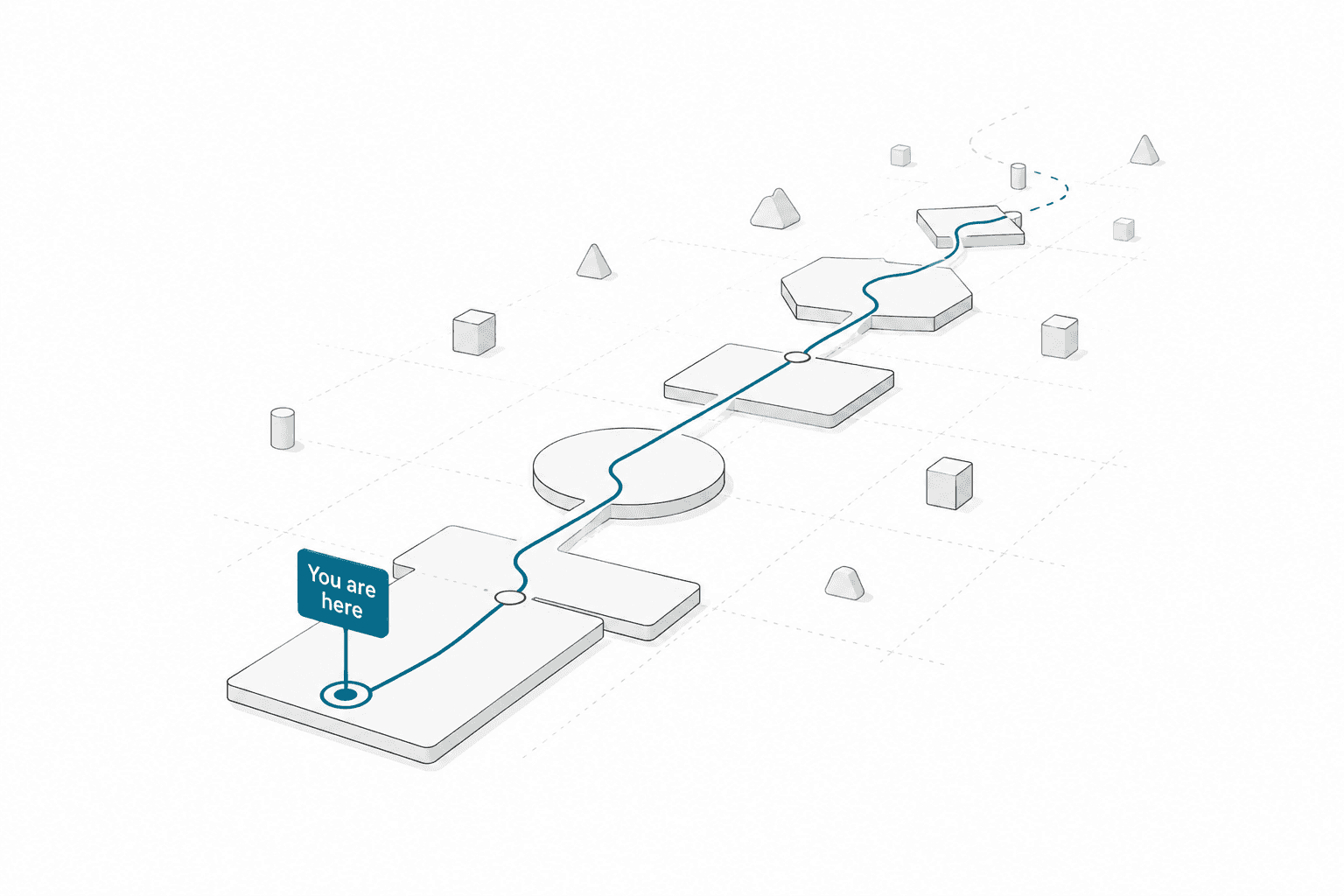
This audit will change over time. The person you are as a trader in year one is not who you'll be in year three. Patience can be developed. Drawdown tolerance grows with experience. The ability to make fast, reliable decisions improves with repetition. Whatever this audit reveals today is a starting point, not a permanent assignment.
The purpose of knowing your current profile is not to limit yourself to strategies that fit perfectly right now. It's to stop wasting time on approaches that are fighting your nature rather than working with it. Find something close enough to work with, get good at it, and revisit this when you feel like the constraints have shifted.
Most traders never do this audit at all. They jump from strategy to strategy, blaming the strategy each time it doesn't work, never noticing that the pattern of failure is following them from one approach to the next.
That pattern is information. This audit is a way to start reading it.
Success Criteria
After completing this lesson, you should be able to produce a written strategy fit profile for yourself and use it to evaluate any new strategy's likely compatibility with how you actually operate.
Common Misconception
You can adapt yourself to any strategy through sufficient discipline.
The Truth: Some mismatches between a trader's psychology and a strategy's demands are structural, not disciplinary, and the right strategy reduces the friction of execution rather than requiring you to constantly work against your own nature.
FAQ's
Q: I'm new to trading and haven't experienced real drawdowns or waiting. How do I answer honestly?
Q: Can I trade more than one strategy at the same time?
Q: What if my scores don't fit cleanly into one profile?
Table of Contents
About Me

Krista Weber
After a career as a VP of UX and EdTech executive, I retired early—and quickly realized the traditional world of trading education is fundamentally broken.
As someone with a Master’s in HCI who specialized in the design of e-learning systems, I saw a massive gap: beginners aren't failing because trading is impossible; they’re failing due to massive cognitive overload and terrible instructional design.
This site bridges that gap. I’m applying the principles of learning science, systems thinking, and minimalist UX to strip away the market noise and teach trading the way it actually should be taught.
Stay in Touch
Some of the pages on my travel blog contain affiliate links. Whenever you buy something through one of these links, I get a small commission at no extra cost to you. As an affiliate, I only recommend products and services that I feel are high quality and helpful to my readers. Thanks for your support.
Read More

Open almost any trading platform and you'll see EUR/USD sitting next to XAU/USD, NQ, ES, and a dozen CFDs on stocks you've heard of. They all show up as candlesticks moving left to right, which quietly implies they're all the same kind of thing. They aren't. Before going deeper into any one of them, it's worth drawing the map.
Updated on Sep 6, 2026

Futures are standardized contracts tied to defined specifications and a future settlement date. They can look complex at first, but the mechanics become much clearer once you know what the contract specification controls. Here's what you actually need to know.
Updated on Sep 6, 2026

CFDs appear everywhere in retail trading – but most new traders couldn't explain exactly what they are or why that matters. Here's a plain-language breakdown, including the parts that most introductions skip.
Updated on Sep 6, 2026