
From UX to FX: Learning Trading the Right Way

How to Use this Website
5 minute read | Last Update: Jun 8, 2026
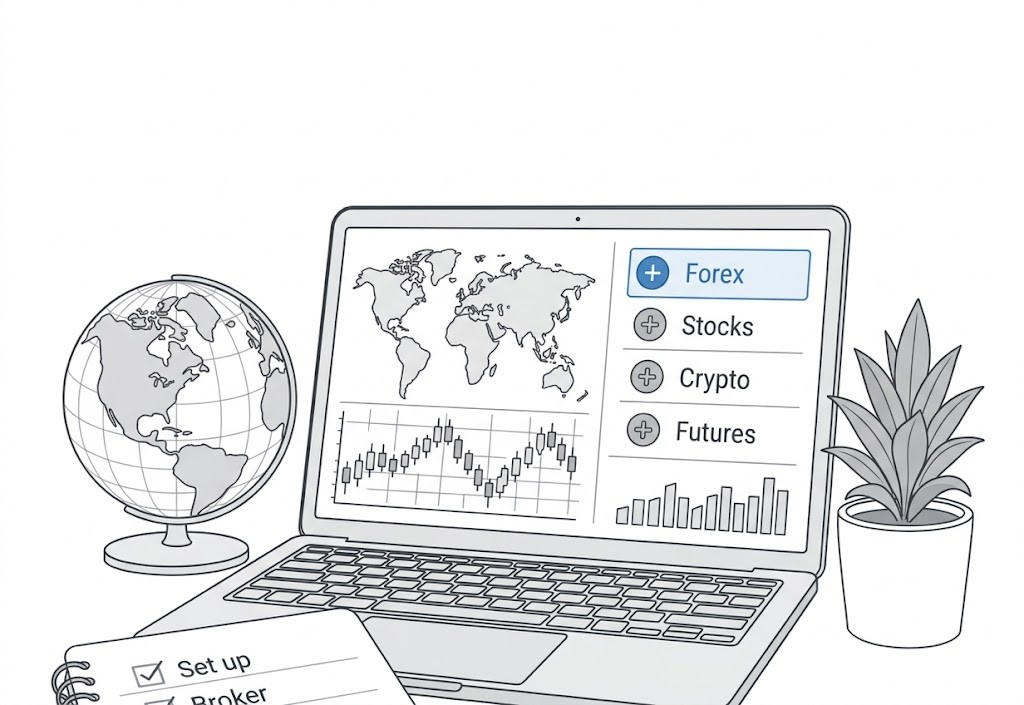
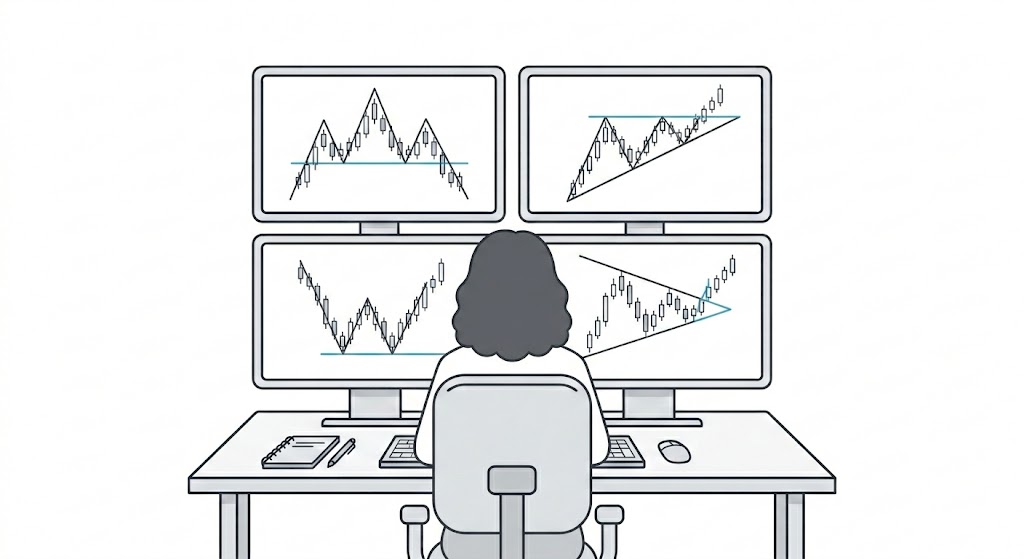
The content is organized in two ways: by topic and by learning level. Topics are things like chart patterns, risk management, and trading psychology. Learning levels describe how deeply you're engaging with those topics, and they follow a specific sequence, because that sequence helps you move to higher levels of learning.


Lessons
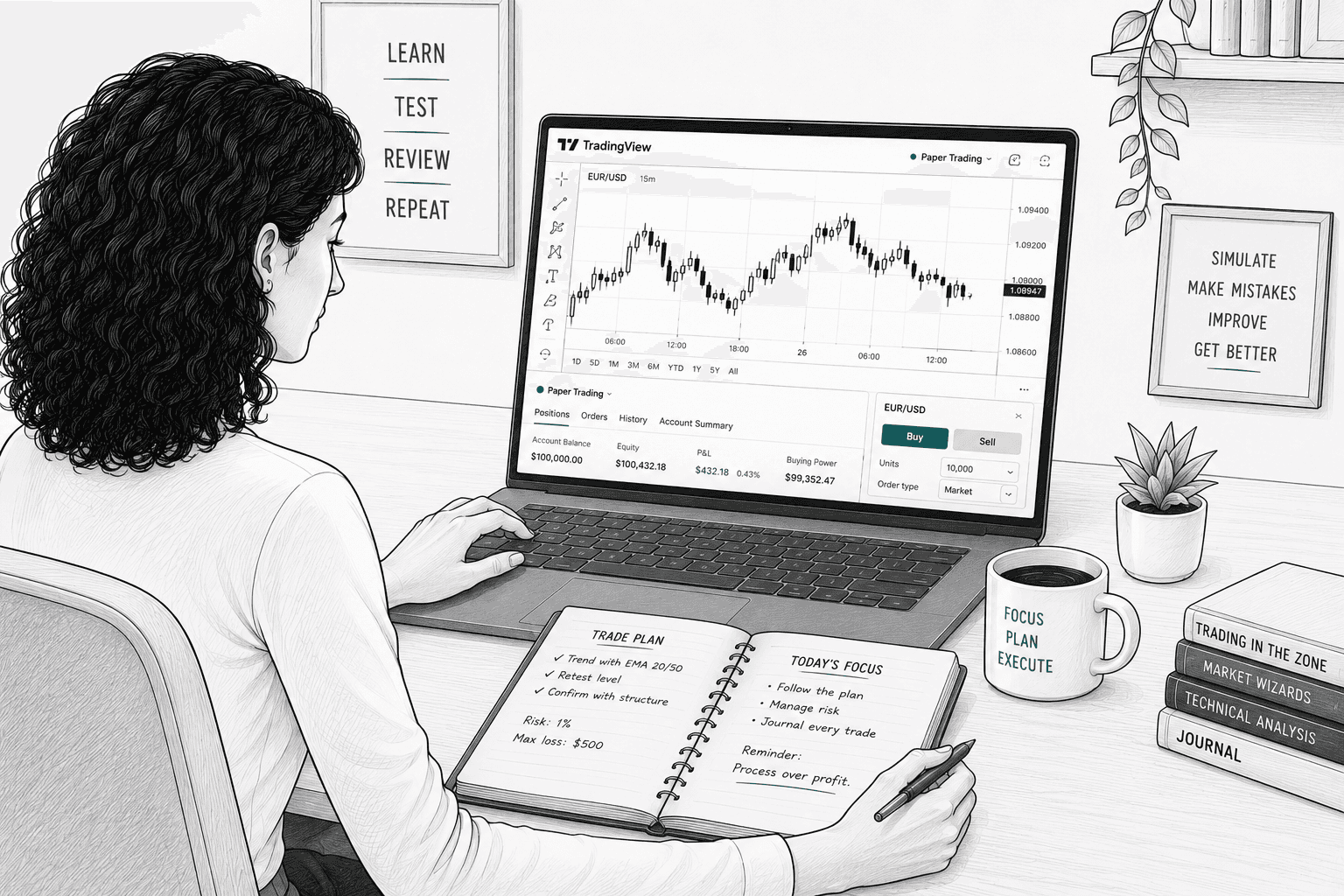
Paper trading means practicing trades with simulated money before risking real capital. It's one of the most consistently recommended starting points for new traders, but it has real limitations that nobody mentions. Here's the full picture.

With dozens of currency pairs available, beginners often trade too many at once – or choose pairs that don't match their schedule, strategy, or account size. Choosing the right pair is a form of strategic clarity most traders underestimate.
Updated on Aug 28, 2026

EUR/USD, GBP/USD, and USD/JPY are all major forex pairs, but the conditions around them can differ. Instead of memorizing a permanent "personality," learn to compare what you can observe now: volatility, session activity, spread and liquidity, event sensitivity, and directional persistence.
Updated on Aug 28, 2026


About Me

Krista Weber
After a career as a VP of UX and EdTech executive, I retired early—and quickly realized the traditional world of trading education is fundamentally broken.
As someone with a Master’s in HCI who specialized in the design of e-learning systems, I saw a massive gap: beginners aren't failing because trading is impossible; they’re failing due to massive cognitive overload and terrible instructional design.
This site bridges that gap. I’m applying the principles of learning science, systems thinking, and minimalist UX to strip away the market noise and teach trading the way it actually should be taught.
Disclosures
UX to FX is free because I believe good trading education should be accessible.
If you find the articles, tools, or flashcards helpful, the best way to support the site is simply to use and share it.
Currently, I don't have any affiliate links or means of monetization on the website at all. Someday, I may recommend books, tools, or services I genuinely use myself. Some of those links may be affiliate links, which means I may earn a small commission at no extra cost to you.
If that ever happens, I’ll always disclose it clearly and only recommend things I actually believe are useful.
Thanks for being here.