
Stage 4: Risk & Mindset
Position sizing, stop losses, and the psychology of losing. The thing nobody teaches early enough.
Latest Articles from Stage 4: Risk & Mindset

Why Good Traders Think in Probabilities
Certainty is a comfort you can't afford in trading. The fastest upgrade in trading mindset is learning to think probabilistically, and understanding what that actually changes about how you operate.
Date Published:
Read Time:
5
minutes

Stop Losses Aren’t Just Protection. They’re How You Control Risk
Most people think stop losses are about limiting losses. That’s only part of the story. A stop loss defines where your idea is wrong and, more importantly, how much you’re risking before you even enter a trade. Once you understand how to pair stop placement with position sizing, you stop reacting to the market and start managing it. This is how you stay consistent, especially in volatile markets like gold and NQ.
Date Published:
Read Time:
5
minutes
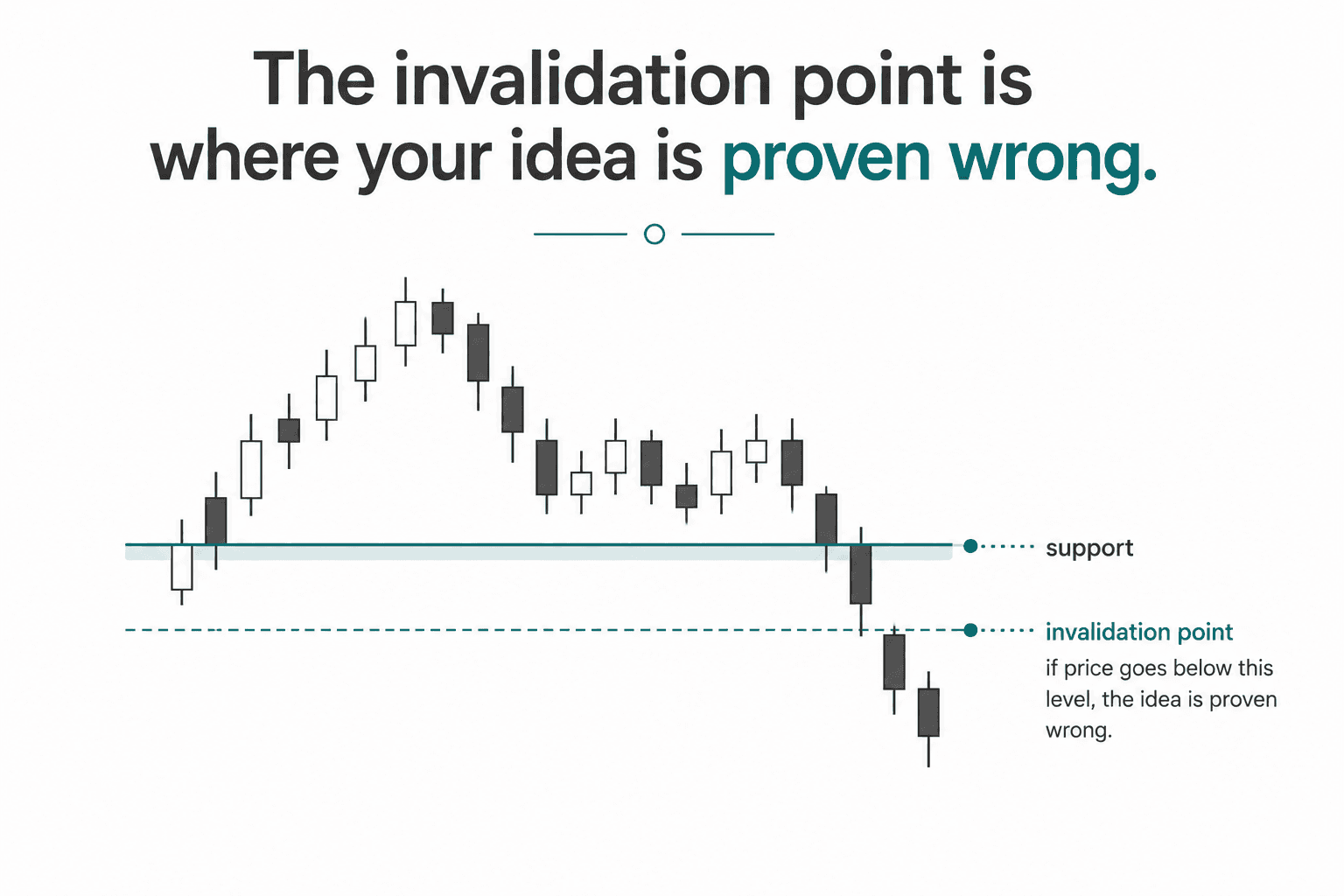
The Invalidation Point
A stop loss is not a tax on trading. It is your invalidation point, the price at which your idea has been proven wrong, decided while you are still calm.
Date Published:
Read Time:
5
minutes

Position Sizing Explained Simply
Position size should be the last decision, not the first. Fix your risk, let the chart set your stop, and the correct size simply falls out.
Date Published:
Read Time:
5
minutes
Read My Stories

Trading gets marketed as passive income or a side hustle. It's neither. It's a skill-intensive discipline with a multi-year learning curve. Understanding this upfront changes how you approach everything that comes next.
Updated on Jul 10, 2026
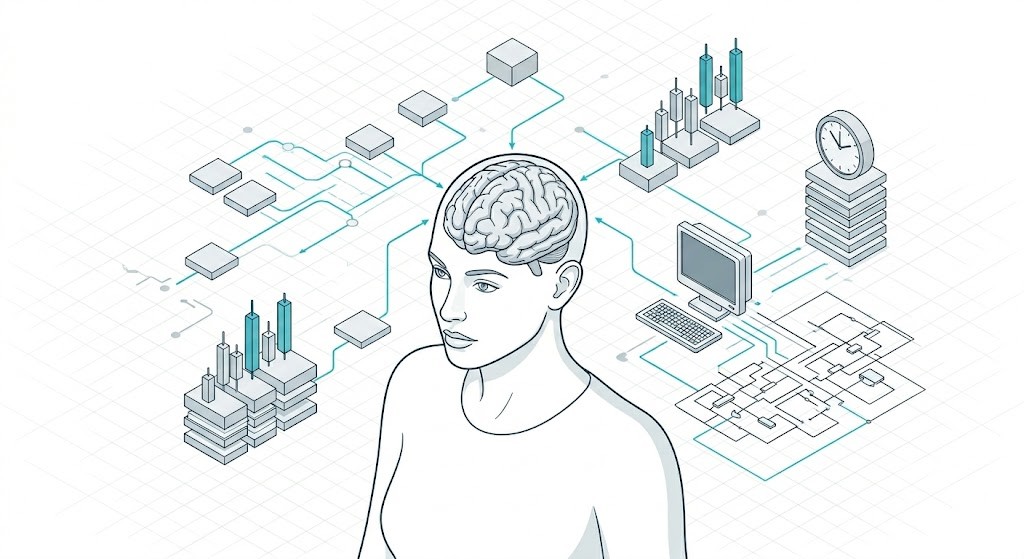
Learning trading takes longer than most people expect. Not because the material is overly complex, but because understanding something and being able to operate inside it are two very different things. Early progress feels real, but it’s mostly recognition. The actual learning begins later, when decisions happen under uncertainty, feedback is inconsistent, and nothing behaves as cleanly as the explanation did.
Updated on May 20, 2026

The trading education industry is worth billions of dollars. Most of it exchanged for information freely available elsewhere. Understanding why paid courses are usually a bad deal for beginners, and where the genuinely good free resources are, saves money and time.
Updated on Jul 10, 2026