
Strategy Series
Articles in series:
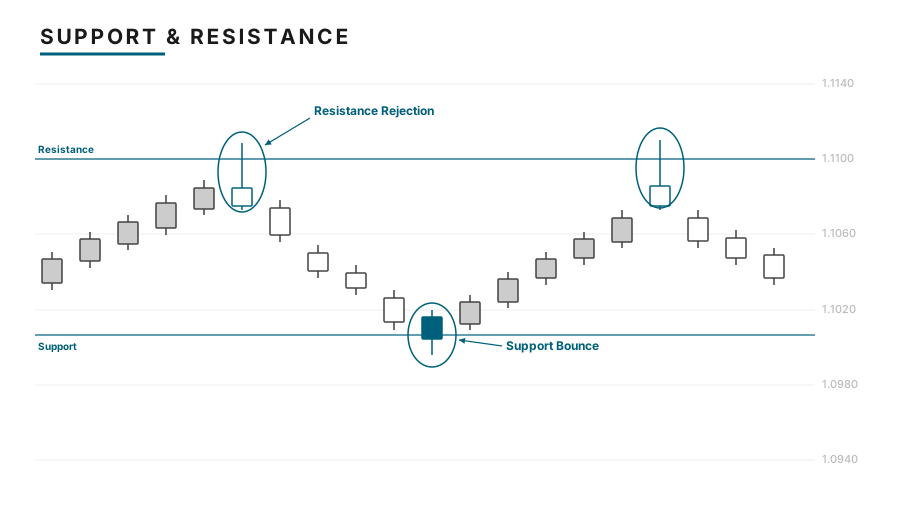
Support & Resistance
S/R
The foundational concept behind almost every other strategy.
Market Environment:
Ranging
Cognitive Style:
Analytical
Decision Speed:
Moderate
Emotional Load:
Low
Difficulty Level:
Foundations
Support and resistance is the foundation of all technical analysis. Before you can read patterns, understand momentum, or evaluate risk — you need to understand where price tends to pause, reverse, and react. This series breaks down the concept from its simplest form to its most nuanced applications, building the visual literacy every trader needs.
Best For:
Difficult For:
prefer structure
enjoy rules
can wait patiently
like visual, chart-based thinking
need constant action
struggle with ambiguous zones
want precise mechanical entries
Articles in series:
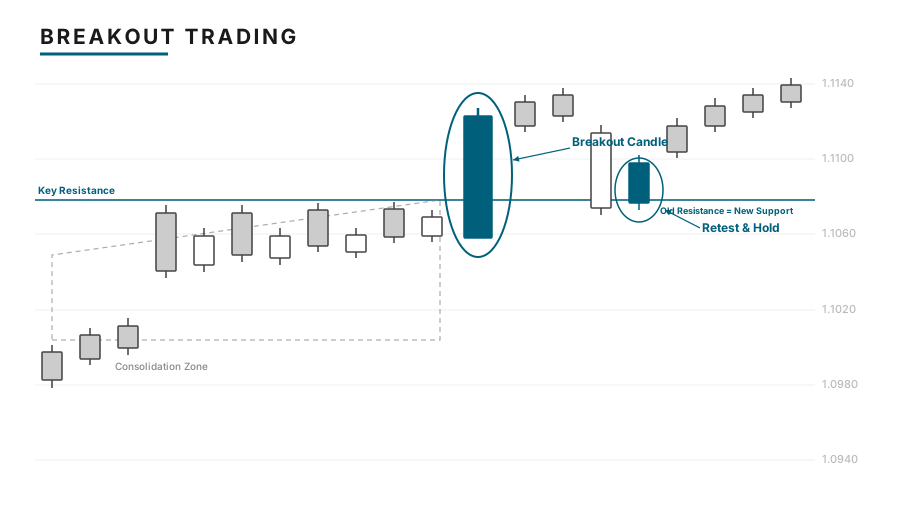
Breakout Trading
BRK
Trade the moment price breaks free from its range.
Market Environment:
Trending
Cognitive Style:
Mechanical
Decision Speed:
Fast
Emotional Load:
High
Difficulty Level:
Intermediate
Breakout trading is one of the most visually compelling approaches in technical analysis — watching price compress into a tight range, then burst through a key level with conviction. The appeal is obvious: you're entering at the start of a move, not chasing it. The challenge is equally obvious: not every break is real. This series covers how to identify high-probability breakouts, structure entries, filter fakeouts, and understand why this strategy works when it does — and fails when it doesn't.
Best For:
Difficult For:
like momentum and decisive moves
can act quickly when a signal appears
prefer clear visual triggers on a chart
are comfortable being wrong sometimes in exchange for being early
tend to chase price after the initial move
get shaken out easily by fakeouts
need high confirmation before entering
struggle emotionally with stop-outs that reverse
Articles in series:
Coming Soon.
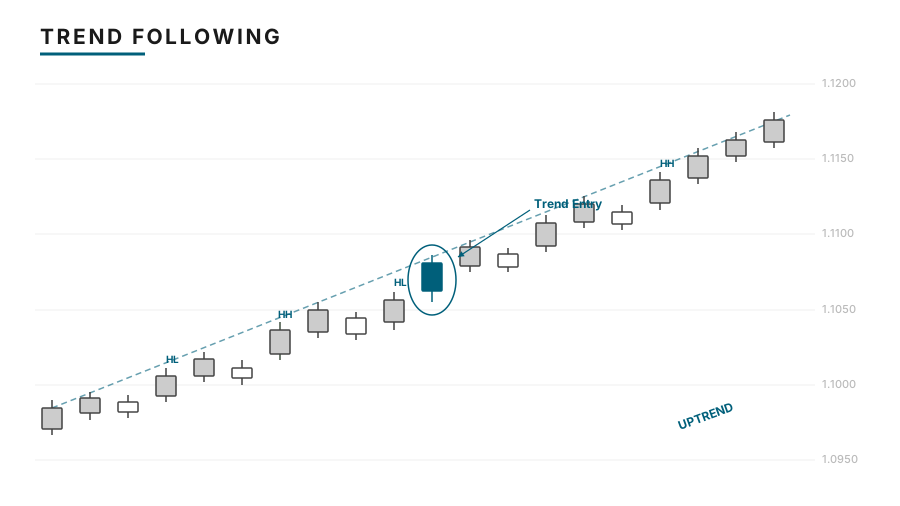
Trend Following
Trend
Trade with the market, not against it.
Market Environment:
Trending
Cognitive Style:
Mechanical
Decision Speed:
Slow
Emotional Load:
Low
Difficulty Level:
Foundations
Trend following is one of the oldest and most proven approaches in trading. The idea is simple: identify the direction the market is moving, and trade in that direction. This series explores how to identify trends objectively, enter on pullbacks, and stay in trades long enough to capture meaningful moves — without letting early exits cost you the bulk of the profit.
Best For:
Difficult For:
prefer structure
can hold positions longer
enjoy riding momentum
comfortable with drawdowns
want to pick tops and bottoms
fight the trend
need frequent trades

Articles in series:
Coming Soon.
Range Trading
Range
Buy low, sell high — within a defined channel.
Market Environment:
Ranging
Cognitive Style:
Analytical
Decision Speed:
Moderate
Emotional Load:
Low
Difficulty Level:
Foundations
Most markets spend more time ranging than trending. Range trading capitalizes on that reality — identifying a bounded area where price bounces between defined high and low zones. This series teaches you to spot quality ranges, time entries at the edges, manage risk within the range, and recognize when a range is about to break before you get caught on the wrong side.
Best For:
Difficult For:
prefer structure and defined rules
enjoy patience and precision
comfortable with smaller, frequent wins
like visual boundaries
need large moves to feel rewarded
struggle with small targets
trade trending markets impulsively

Articles in series:
Coming Soon.
Candlestick Reading
Candles
Learn to read what price is telling you before any indicator does.
Market Environment:
Mixed
Cognitive Style:
Intuitive
Decision Speed:
Moderate
Emotional Load:
Low
Difficulty Level:
Foundations
Candlestick patterns are the language of price action. Each candle captures a moment in market psychology — who was in control, who lost control, and what might come next. This series covers essential formations, their context, and how to use them as confirmation rather than standalone signals. Candlestick reading is a skill that improves every other strategy you trade.
Best For:
Difficult For:
enjoy visual pattern recognition
like context-based decisions
tolerate some ambiguity
enjoy studying price behavior
want purely mechanical signals
are impatient with ambiguity
dislike visual/pattern-based analysis
Articles in series:
Coming Soon.
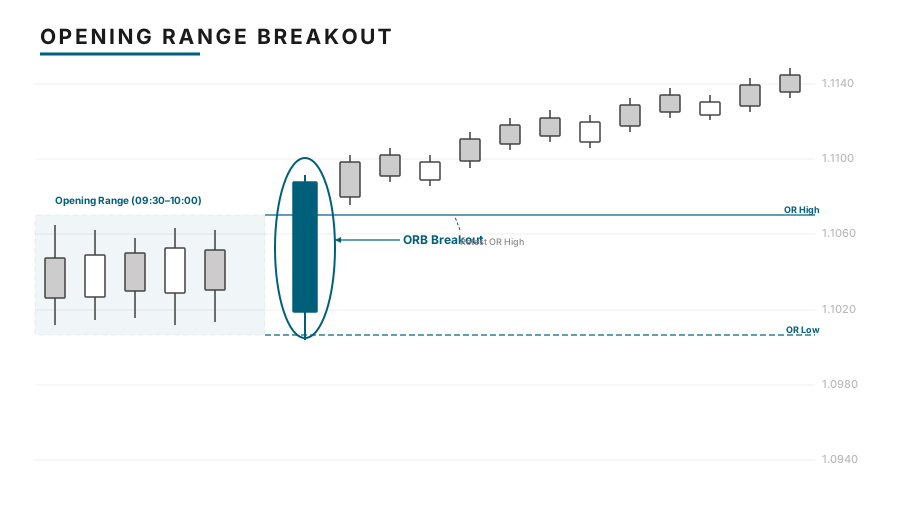
Opening Range Breakout
ORB
Trade the breakout of the first candle range after market open.
Market Environment:
Volatile
Cognitive Style:
Mechanical
Decision Speed:
Fast
Emotional Load:
High
Difficulty Level:
Intermediate
The Opening Range Breakout is built on a simple but powerful idea: the first period of trading — often 15 to 30 minutes — establishes a range that defines the day's sentiment. When price breaks out of that range with conviction, it often follows through. This series teaches you how to define the range, filter for quality breakouts, and manage the fast-moving trades that follow.
Best For:
Difficult For:
like fast decision-making
can handle volatility
prefer short sessions (1–2 hours)
want clear, rule-based entries
are available at market open
need time to think before acting
are stressed by news events and volatility
trade from a time zone where the open is overnight
overtrade out of boredom
Articles in series:
Coming Soon.
VWAP
VWAP
The volume-weighted average price — where institutions benchmark their trades.
Market Environment:
Trending
Cognitive Style:
Analytical
Decision Speed:
Moderate
Emotional Load:
Medium
Difficulty Level:
Intermediate
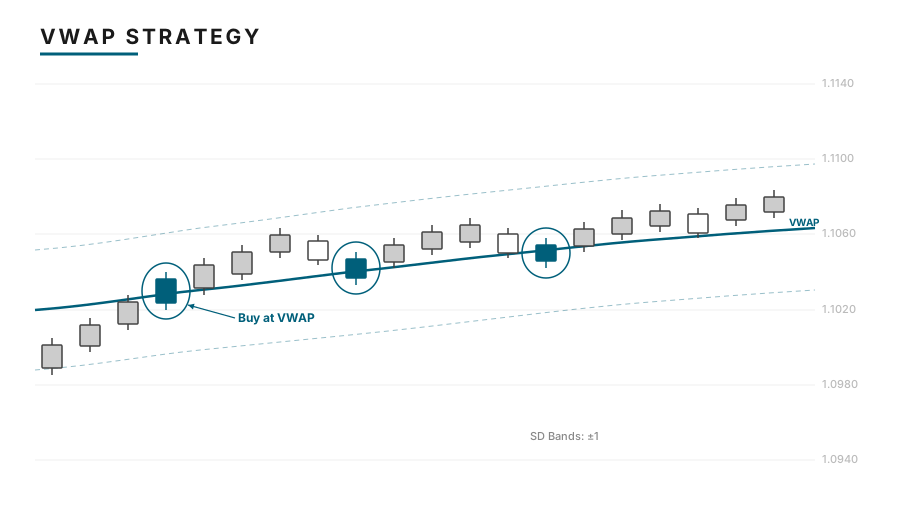
VWAP — Volume Weighted Average Price — is the benchmark institutions use to evaluate their own trade executions. When price is above VWAP, institutional bias is generally bullish; below it, bearish. This series explains what VWAP actually measures, how institutions use it internally, and how to align with — rather than fight against — that institutional order flow.
Best For:
Difficult For:
like data-backed decisions
enjoy intraday context and positioning
trade equities, futures, or indices
want an institutional reference point
prefer pure price action without indicators
dislike intraday context-switching
trade very short timeframes (sub-1 min)
Articles in series:
Coming Soon.
EMA Trend Systems
EMA
Use moving average crossovers and alignment to trade with momentum.
Market Environment:
Trending
Cognitive Style:
Mechanical
Decision Speed:
Moderate
Emotional Load:
Low
Difficulty Level:
Intermediate
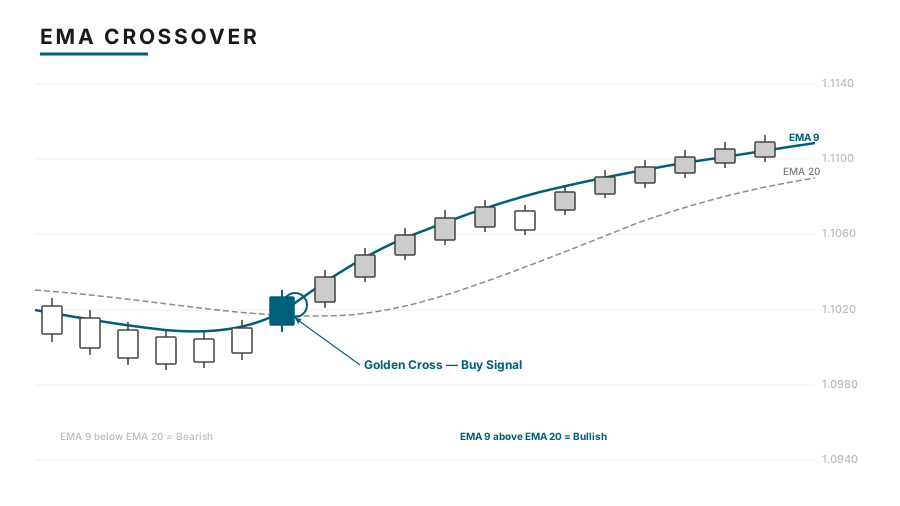
Exponential Moving Averages smooth price data to reveal trend direction and momentum. EMA-based systems use crossovers, slope, and price position relative to key levels — like the 8, 21, and 50 EMA — to filter trades and define bias. This series covers how EMAs work mechanically, how to build rules around them, and how to avoid the traps that catch most EMA traders.
Best For:
Difficult For:
like rule-based systems
comfortable with indicator-based confirmation
prefer defined entry and exit logic
enjoy systematic approaches
want instant entries
dislike indicator lag
need to understand every signal from first principles

Articles in series:
Coming Soon.
Supply & Demand
S&D
Price moves from supply to demand zones — find them, trade the reaction.
Market Environment:
Mixed
Cognitive Style:
Analytical
Decision Speed:
Slow
Emotional Load:
Medium
Difficulty Level:
Intermediate
Supply and demand zones are areas on the chart where institutional traders left unfilled orders. When price returns to these zones, those orders get filled again — often causing sharp, swift reactions. This series teaches you to identify quality zones, understand why they work from an order flow perspective, and use them to time high-probability entries with tight, well-defined risk.
Best For:
Difficult For:
enjoy mapping market structure
like understanding the why behind price moves
can wait patiently for price to return to a zone
comfortable with some subjectivity in analysis
want mechanical entries at exact prices
dislike subjective zone identification
are impatient waiting for price to return to a zone

Articles in series:
Coming Soon.
Smart Money Concepts
SMC
A modern framework for reading markets through the lens of institutional order flow.
Market Environment:
Mixed
Cognitive Style:
Analytical
Decision Speed:
Moderate
Emotional Load:
Medium
Difficulty Level:
Advanced
Smart Money Concepts is a framework for understanding how large institutional traders move the market. It reframes traditional technical analysis through the lens of liquidity — where retail stops are clustered, why price raids those levels, and how to position on the right side of institutional activity. This series unpacks the SMC vocabulary and logic from the ground up, one concept at a time.
Best For:
Difficult For:
enjoy deep study and framework-building
tolerate ambiguity and refinement over time
think in terms of market structure
like understanding institutional behavior
want simple, rule-based systems
are frustrated by ambiguity
dislike deep theoretical frameworks
need fast validation to stay motivated

Articles in series:
Coming Soon.
ICT (Inner Circle Trader)
ICT
A comprehensive trading methodology built around time, price, and institutional logic.
Market Environment:
Mixed
Cognitive Style:
Analytical
Decision Speed:
Slow
Emotional Load:
High
Difficulty Level:
Advanced
ICT methodology, developed by Michael J. Huddleston, is a comprehensive trading framework built around the concept that markets are engineered to move liquidity. Concepts like fair value gaps, optimal trade entries, and market maker models describe how price manipulates retail traders before making its real move. This series navigates the ICT framework methodically — concept by concept, without the noise.
Best For:
Difficult For:
enjoy deep, long-form study
tolerate ambiguity and context-dependent analysis
prefer narrative and context over mechanical rules
are comfortable building a personal methodology over time
want quick, simple setups
are uncomfortable with narrative-based analysis
dislike ambiguity or evolving frameworks
need external validation to trade confidently

Articles in series:
Coming Soon.
Liquidity Concepts
Liquidity
Markets move to find and take liquidity — learn to see where it pools.
Market Environment:
Mixed
Cognitive Style:
Analytical
Decision Speed:
Moderate
Emotional Load:
Medium
Difficulty Level:
Advanced
Liquidity is what makes markets move. Price doesn't trend randomly — it seeks out areas where orders are clustered, sweeps them, and then reverses or continues with the gathered fuel. Understanding liquidity means understanding why stop hunts happen, where they're likely to occur, and how to position yourself after the sweep rather than inside it.
Best For:
Difficult For:
enjoy thinking about why price moves, not just where
comfortable with probabilistic, anticipatory thinking
like understanding market structure and traps
are patient enough to wait for liquidity grabs to complete
want simple entry rules without contextual analysis
are put off by concepts like stop hunts or manipulation
need immediate confirmation rather than anticipatory setups

Articles in series:
Coming Soon.
Market Structure Shifts
MSS
Identify when the market switches direction by reading structure breaks.
Market Environment:
Trending
Cognitive Style:
Analytical
Decision Speed:
Moderate
Emotional Load:
Medium
Difficulty Level:
Intermediate
Market structure is the skeleton of price action — the series of higher highs and higher lows (or lower highs and lower lows) that defines trend direction. A market structure shift is the moment that skeleton breaks. Identifying these moments early lets traders catch reversals before they're obvious, with the favorable risk-to-reward ratios that only come from entering before the crowd.
Best For:
Difficult For:
enjoy multi-timeframe analysis
like anticipating trend changes rather than chasing them
are comfortable with confirmation-based entries
think in terms of structure and context
want clear mechanical buy/sell signals
dislike reading context across multiple timeframes
are impatient with confirmation-heavy approaches
Articles in series:
Coming Soon.
Scalping
Scalping
High-frequency, small-target trading that demands speed and discipline.
Market Environment:
Volatile
Cognitive Style:
Mechanical
Decision Speed:
Fast
Emotional Load:
High
Difficulty Level:
Advanced
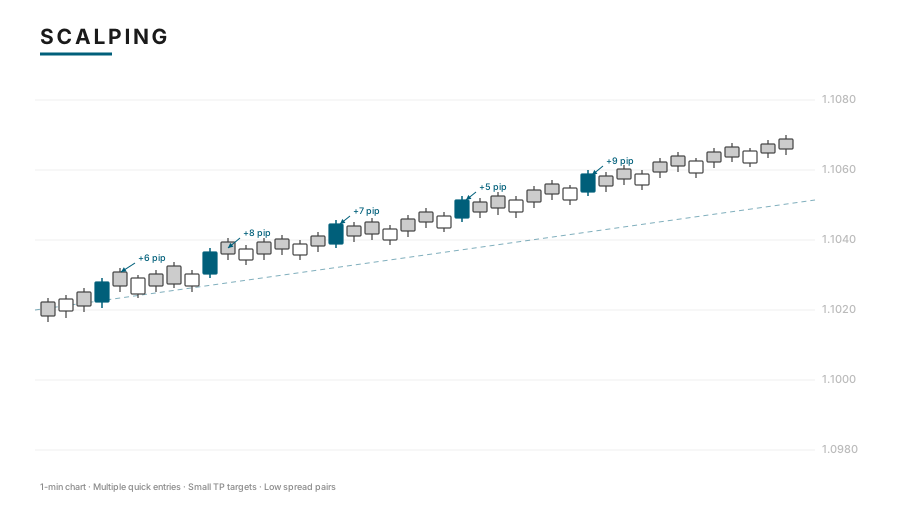
Scalping is the art of extracting small profits from very short-term price movements — often holding trades for seconds to minutes. It demands exceptional focus, fast execution, and a statistical edge that can be repeated dozens of times per session. This series examines the psychology, execution mechanics, and system design behind scalping that actually holds up over time.
Best For:
Difficult For:
make fast, instinctive decisions
handle stress and rapid feedback without emotional disruption
have access to low-latency execution
can maintain intense focus for short bursts
need time to think through decisions
are emotionally affected by rapid wins and losses
cannot monitor screens continuously
struggle with strict, frequent stop losses
Articles in series:
Coming Soon.
News Trading
News
Trade the market reaction to scheduled economic data releases.
Market Environment:
Volatile
Cognitive Style:
Analytical
Decision Speed:
Fast
Emotional Load:
High
Difficulty Level:
Specialized
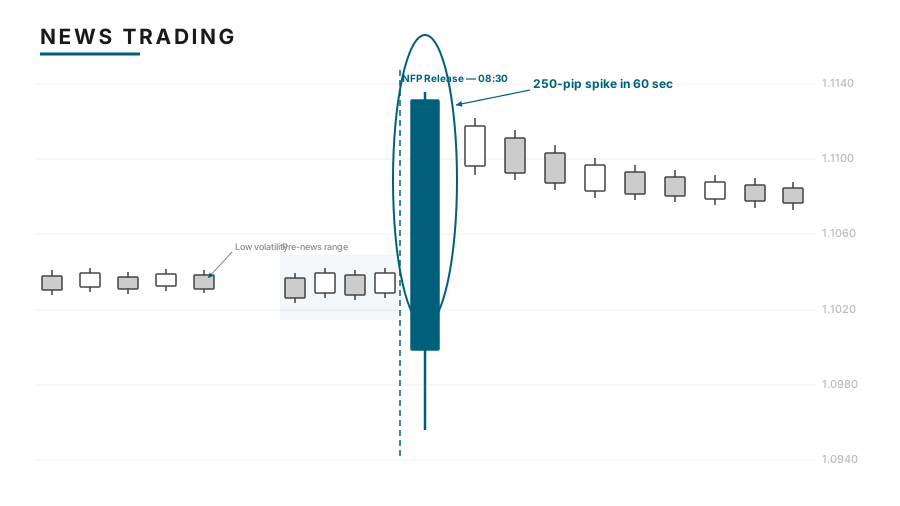
News events — NFP, CPI, FOMC announcements — create some of the sharpest, most predictable volatility in the market. News trading captures that volatility by positioning around economic data releases. This series covers how to read economic calendars, understand the gap between expectations and actual outcomes, and navigate the unique risks that come with trading into scheduled uncertainty.
Best For:
Difficult For:
follow macroeconomic events and central bank policy
can stay calm under sudden volatility
make fast decisions with incomplete information
enjoy the intersection of fundamental and technical analysis
are rattled by sudden volatility
dislike ambiguity in entries
cannot watch the market during news windows
need predictable, patterned setups
Articles in series:
Coming Soon.
Session-Based Strategies
Session
Trade around the behavioral patterns of specific market sessions.
Market Environment:
Mixed
Cognitive Style:
Mechanical
Decision Speed:
Slow
Emotional Load:
Low
Difficulty Level:
Intermediate
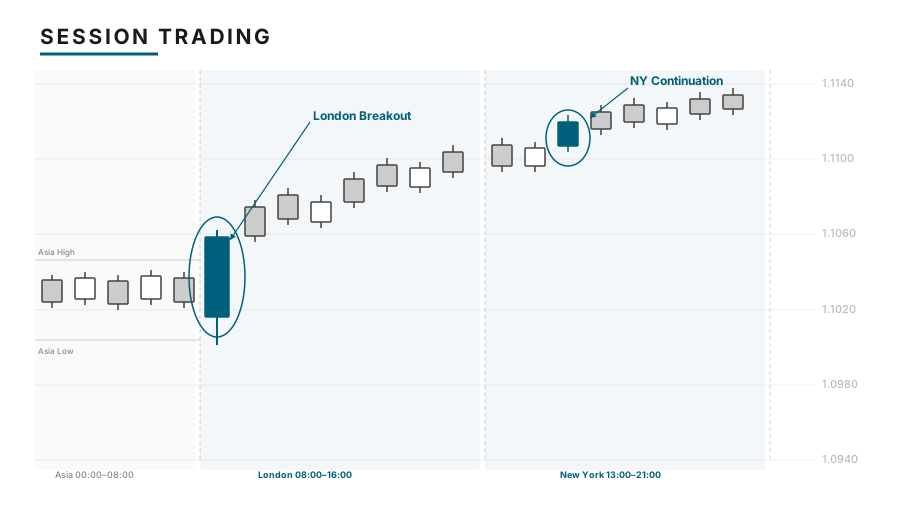
The forex and futures markets run 24 hours, but not all hours are equal. The Asian, London, and New York sessions each have distinct personalities — different volatility profiles, different participants, and different tendencies. Session-based strategies are built around these rhythms, helping you know when to be active, when to stand aside, and what to expect from each trading window.
Best For:
Difficult For:
have a consistent schedule aligned with a major session
like understanding market context by time of day
enjoy the structure of defined trading windows
want to specialize in a specific session's behavior
need flexibility in when they trade
cannot commit to a specific window consistently
dislike time-constrained approaches