
Stage 4: Risk & Mindset
Position sizing, stop losses, and the psychology of losing. The thing nobody teaches early enough.
Latest Articles from Stage 4: Risk & Mindset

Stop Losses Aren’t Just Protection. They’re How You Control Risk
Most people think stop losses are about limiting losses. That’s only part of the story. A stop loss defines where your idea is wrong and, more importantly, how much you’re risking before you even enter a trade. Once you understand how to pair stop placement with position sizing, you stop reacting to the market and start managing it. This is how you stay consistent, especially in volatile markets like gold and NQ.
Date Published:
Read Time:
5
minutes
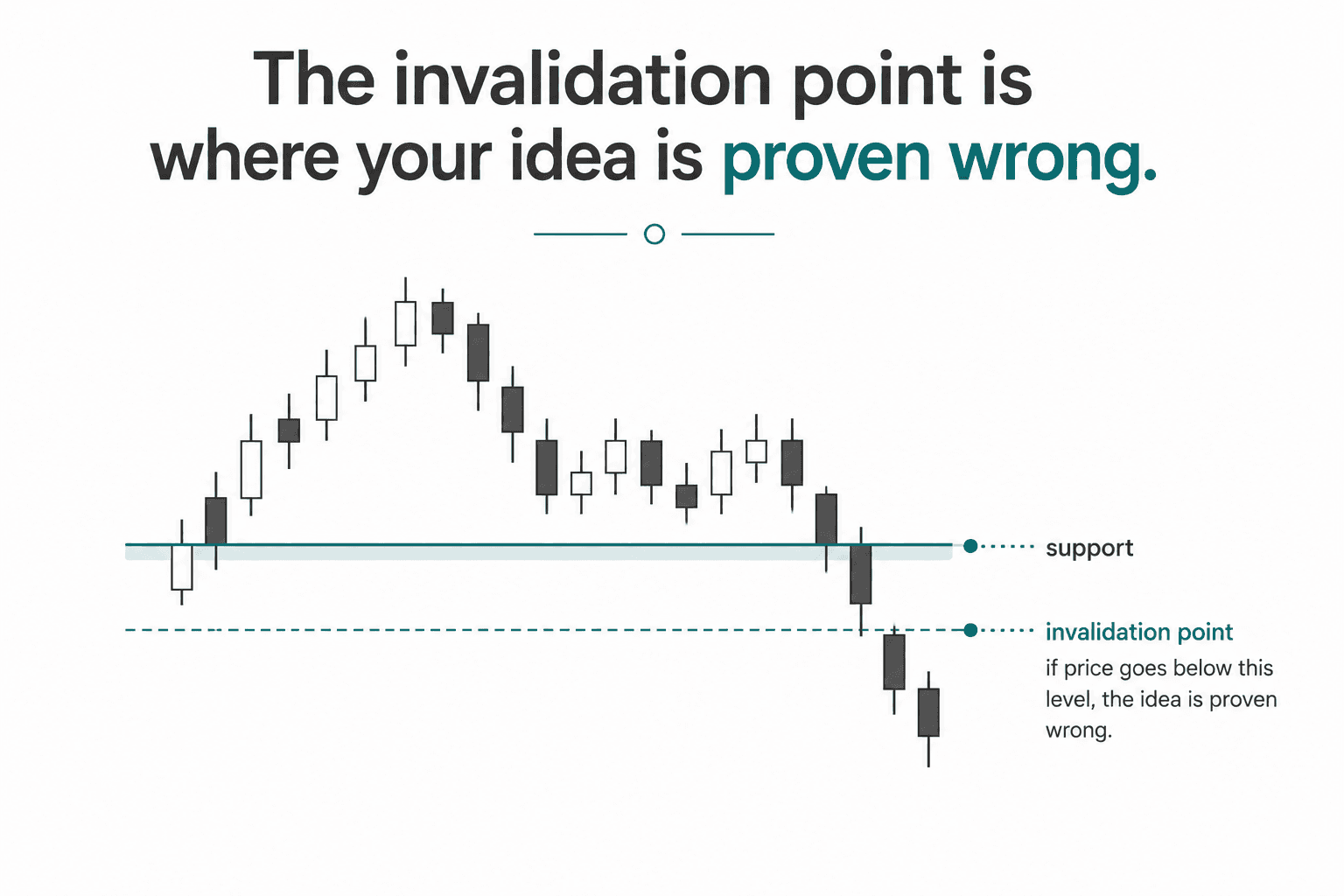
The Invalidation Point
A stop loss is not a tax on trading. It is your invalidation point, the price at which your idea has been proven wrong, decided while you are still calm.
Date Published:
Read Time:
5
minutes

Position Sizing Explained Simply
Position size should be the last decision, not the first. Fix your risk, let the chart set your stop, and the correct size simply falls out.
Date Published:
Read Time:
5
minutes

Why Wide Stops Are Not Automatically Bad
A stop belongs where your idea is proven wrong, not at a distance you find comfortable. A wide stop is not a bigger loss. It is a smaller position.
Date Published:
Read Time:
5
minutes
Read My Stories

Your first week in a trading platform is genuinely disorienting. Prices move in ways that don't match what you read. Decisions that seem obvious in hindsight aren't obvious in real time. This is completely normal . Here's what to actually expect, so you can make the most of the learning curve rather than fighting it.
Updated on Jul 8, 2026

An inside bar is a two-candle pattern where the second candle's high and low are both contained within the range of the first candle. The first candle (the "mother bar") engulfs the second. This containment signals a pause, indicating he market has compressed into a tighter range after a directional move. Inside bars are used as entry triggers and as precursors to breakout moves.
Updated on Jul 7, 2026

The internet delivers confident trading knowledge at industrial scale. Most of it is untested, some of it actively harmful. Developing the ability to evaluate what you're being taught, and what you think you've learned, is one of the most useful meta-skills in trading.
Updated on Jul 4, 2026