
Stage 3: Chart Patterns
Head and shoulders, flags, wedges, inside bars all taught visually, not with jargon.
Latest Articles from Stage 3: Chart Patterns

Why Humans Keep Drawing Faces in Charts
Humans are evolutionarily optimized for pattern recognition. That’s incredibly useful when identifying threats in the wild. It becomes slightly more problematic when staring at candlestick charts at 2:00 AM convincing yourself that a vaguely triangular formation “cannot fail.” This article explores why traders start seeing patterns everywhere, the psychology behind chart recognition, and the important difference between meaningful market behavior and your brain enthusiastically connecting dots that may not actually matter.
Date Published:
Read Time:
9
minutes

Double Top & Double Bottom: The Market’s “One More Try” Pattern
Date Published:
Read Time:
5
minutes

Head & Shoulders: The Chart Pattern Everyone Learns First
Most traders learn the Head & Shoulders pattern as a shape to memorize. But underneath the strange name and mountain-like structure is something much more important: momentum exhaustion. This article breaks down the psychology behind the pattern, why traders watch it, and how to stop seeing chart patterns as magic drawings and start seeing them as behavior stories.
Date Published:
Read Time:
10
minutes

Ascending vs Descending Triangles
One boundary holds, the other moves, and the side that is moving is the side showing increasing urgency. That moving side is where the lean comes from.
Date Published:
Read Time:
5
minutes
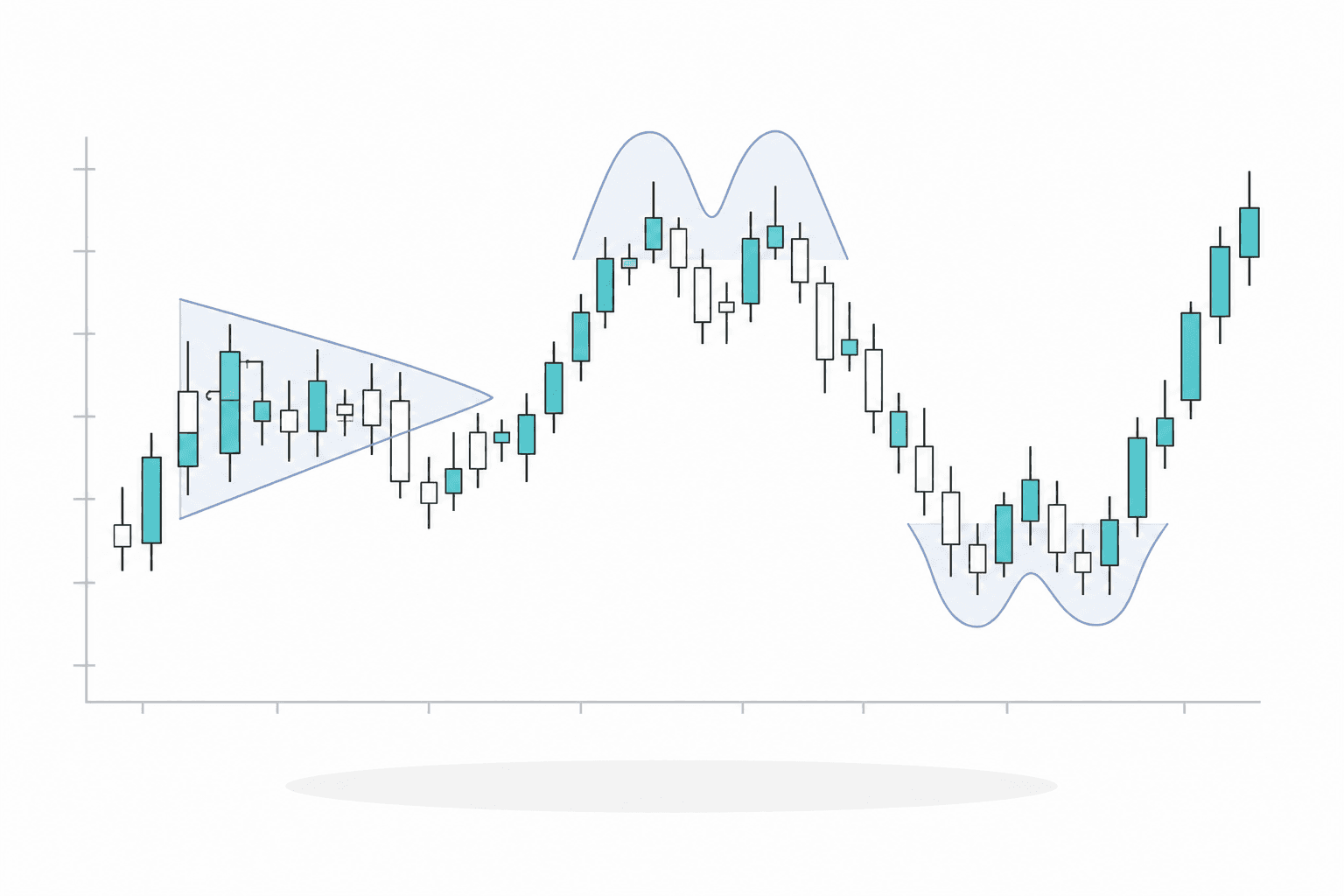
What Even Counts as a Chart Pattern?
A chart pattern is a recurring shape, but it only counts when the shape reflects a real behavioral situation. The name is shorthand. The behavior is the subject.
Date Published:
Read Time:
5
minutes
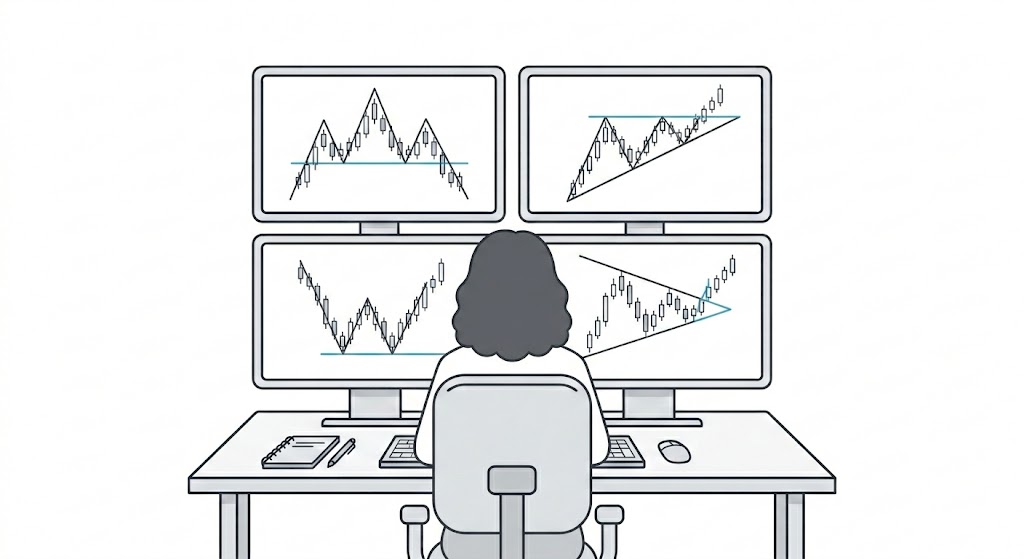
Why Chart Patterns Work (When They Do)
Chart patterns work when the behavior they describe is genuinely present and enough traders act on it. Treating them as probabilities, not promises, is the whole skill.
Date Published:
Read Time:
5
minutes
Read My Stories

Most chart reading education teaches you how to read one type of market. The real skill is recognizing when the market has changed its character and adjusting what you look for, and how you read it, accordingly.
Updated on Jul 3, 2026

At some point, applying someone else's chart reading framework starts to feel like wearing someone else's prescription glasses. Developing your own — built from tools that suit your perception and trading style — is how chart reading becomes genuinely fluent.
Updated on Jul 3, 2026
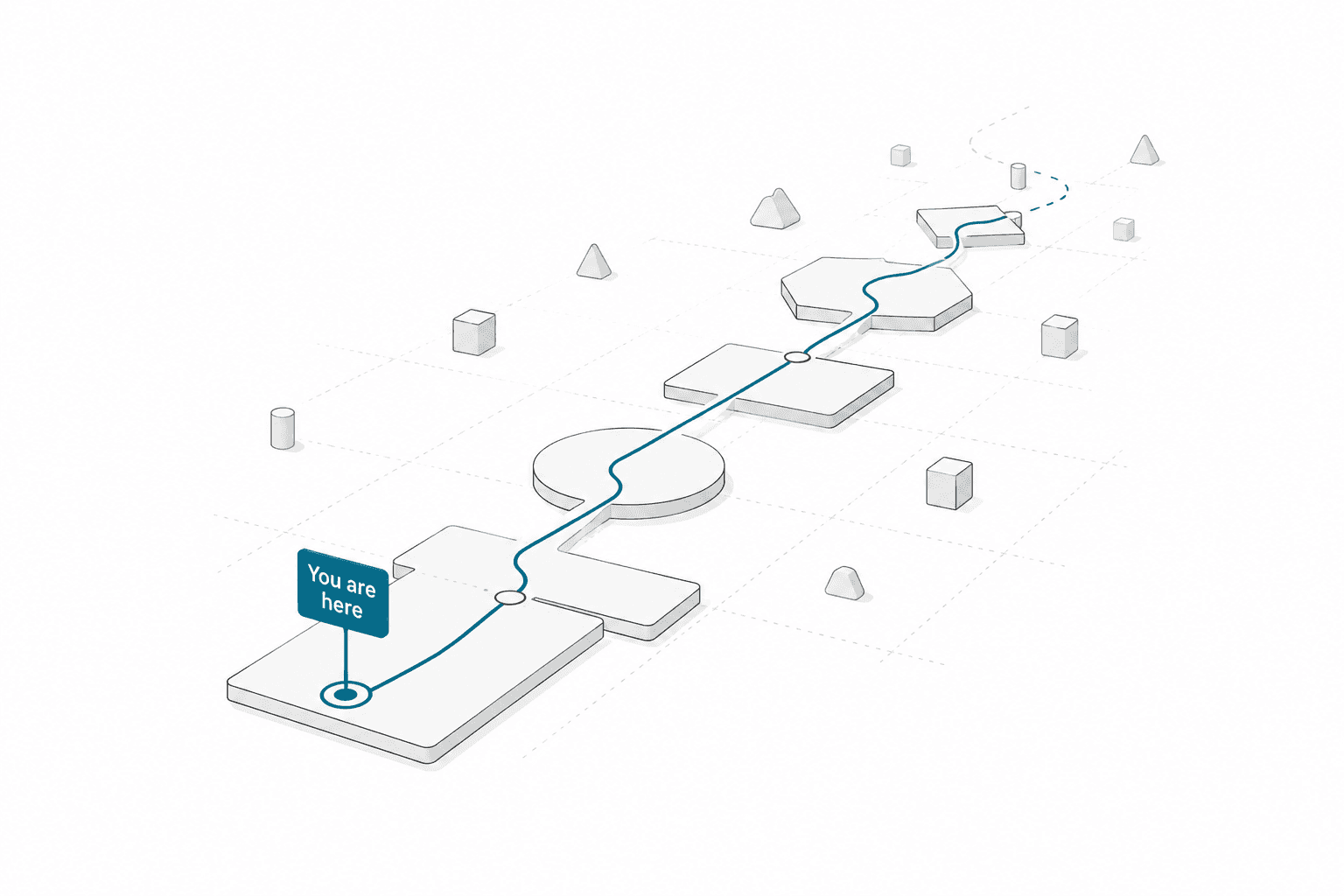
The content is organized in two ways: by topic and by learning level. Topics are things like chart patterns, risk management, and trading psychology. Learning levels describe how deeply you're engaging with those topics — and they follow a specific sequence, because that sequence matters.
Updated on Jun 8, 2026