
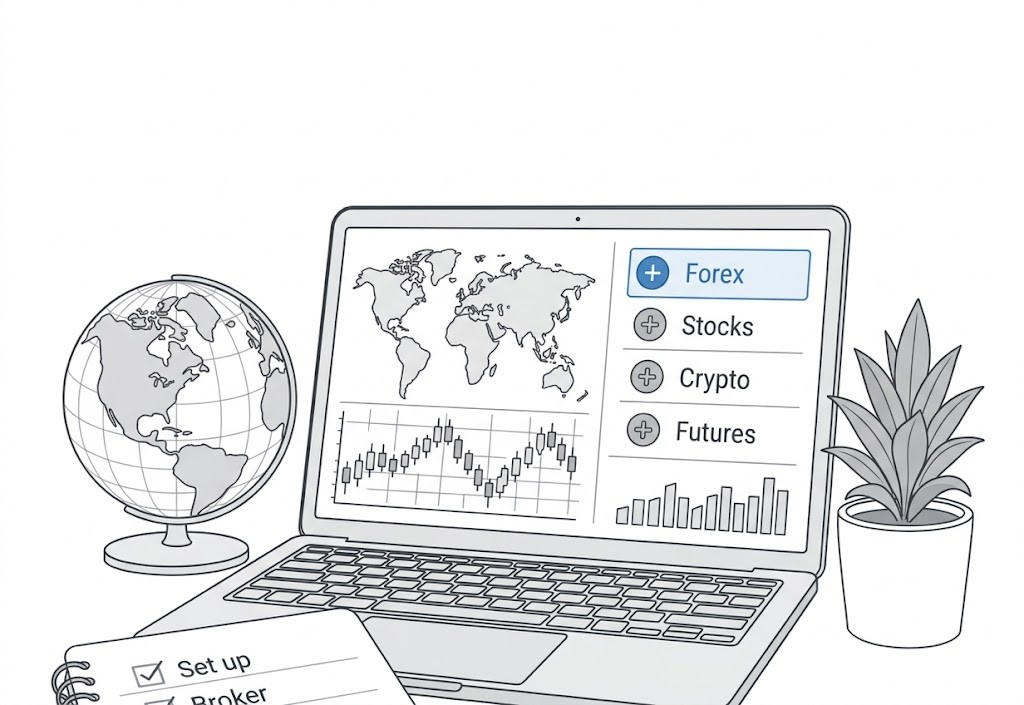
Stage 1: Foundations
Before you can read charts or develop a strategy, you need to build a solid foundation. These learning paths introduce the markets, realistic expectations, paper trading, platforms, terminology, and the skills that every trader needs.
Beginner Trading Series
Build the mindset and learning habits that set successful traders apart. Learn how to practice safely, avoid common beginner mistakes, and develop realistic expectations.
12 Articles
Latest Articles from Stage 1: Foundations

Trading Is a Skill, Not a Side Hustle
Trading gets marketed as passive income or a side hustle. It's neither. It's a skill-intensive discipline with a multi-year learning curve. Understanding this upfront changes how you approach everything that comes next.
Date Published:
Read Time:
5
minutes
Why Learning Trading Takes Longer Than People Think
Learning trading takes longer than most people expect. Not because the material is overly complex, but because understanding something and being able to operate inside it are two very different things. Early progress feels real, but it’s mostly recognition. The actual learning begins later, when decisions happen under uncertainty, feedback is inconsistent, and nothing behaves as cleanly as the explanation did.
Date Published:
Read Time:
7
minutes

Why Buying Information Won't Make You a Better Trader
The trading education industry is worth billions of dollars. Most of it exchanged for information freely available elsewhere. Understanding why paid courses are usually a bad deal for beginners, and where the genuinely good free resources are, saves money and time.
Date Published:
Read Time:
5
minutes
Why Most Beginner Traders Overcomplicate Everything (And How to Stop)
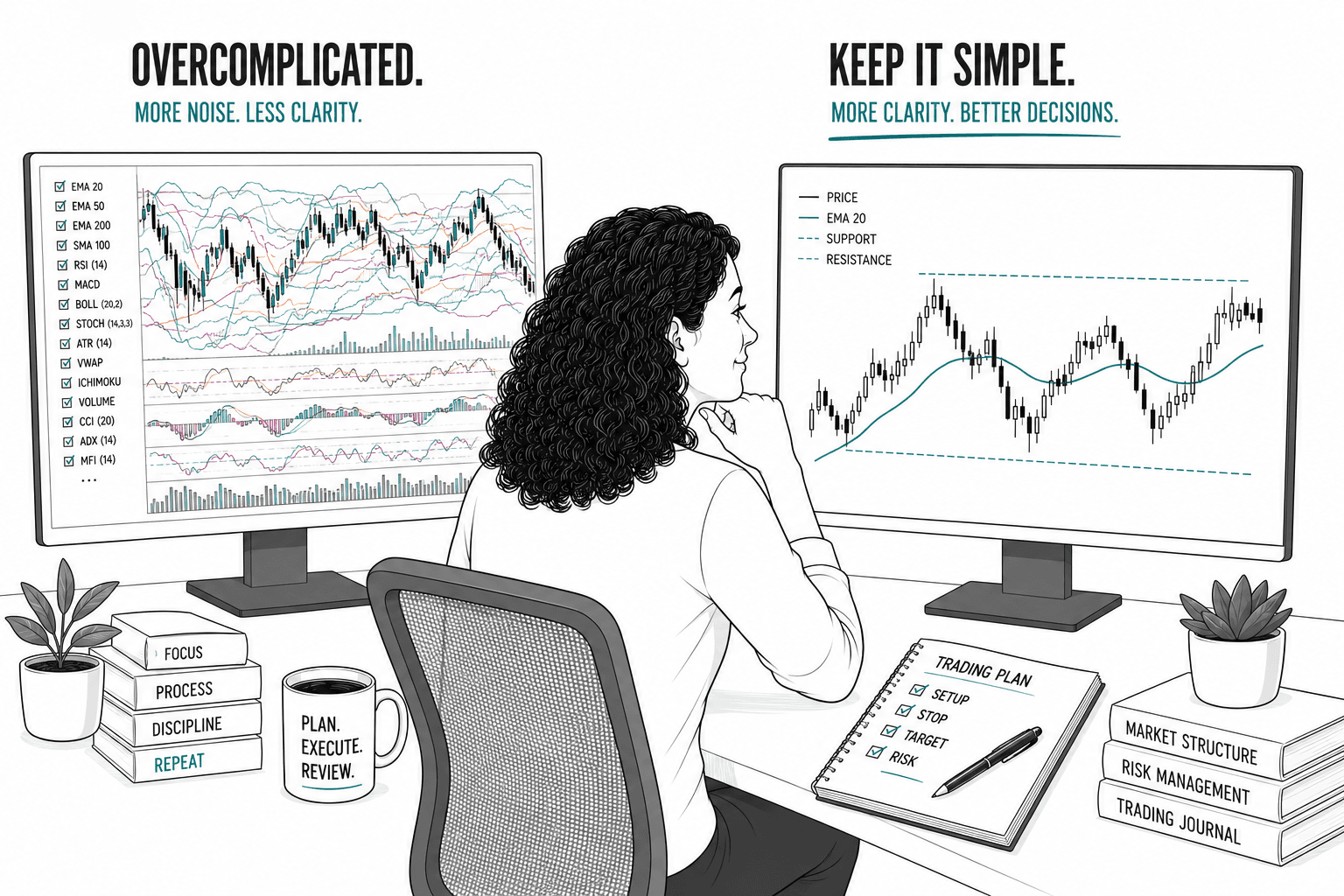
New traders tend to add complexity (more indicators, more strategies, more analysis) believing that sophistication leads to better results. It almost never does. Here's why simplicity wins and complexity costs more than it gives.
Date Published:
Read Time:
5
minutes

Stop Studying. Start Charting. (That’s How You Actually Learn to Trade)
Consuming trading content feels like progress. It often isn't. Here's how to distinguish between the two, and what to do when you realize you've been in consumption mode for months.
Date Published:
Read Time:
5
minutes

How to Evaluate Trading Resources Before You Trust Them
The internet contains an almost infinite amount of trading content, and a significant proportion of it ranges from mediocre to actively harmful. This lesson introduces a simple three-filter framework for evaluating trading educators, courses, videos, and communities before you invest your time or money.
Date Published:
Read Time:
5
minutes
What Paper Trading Actually Is
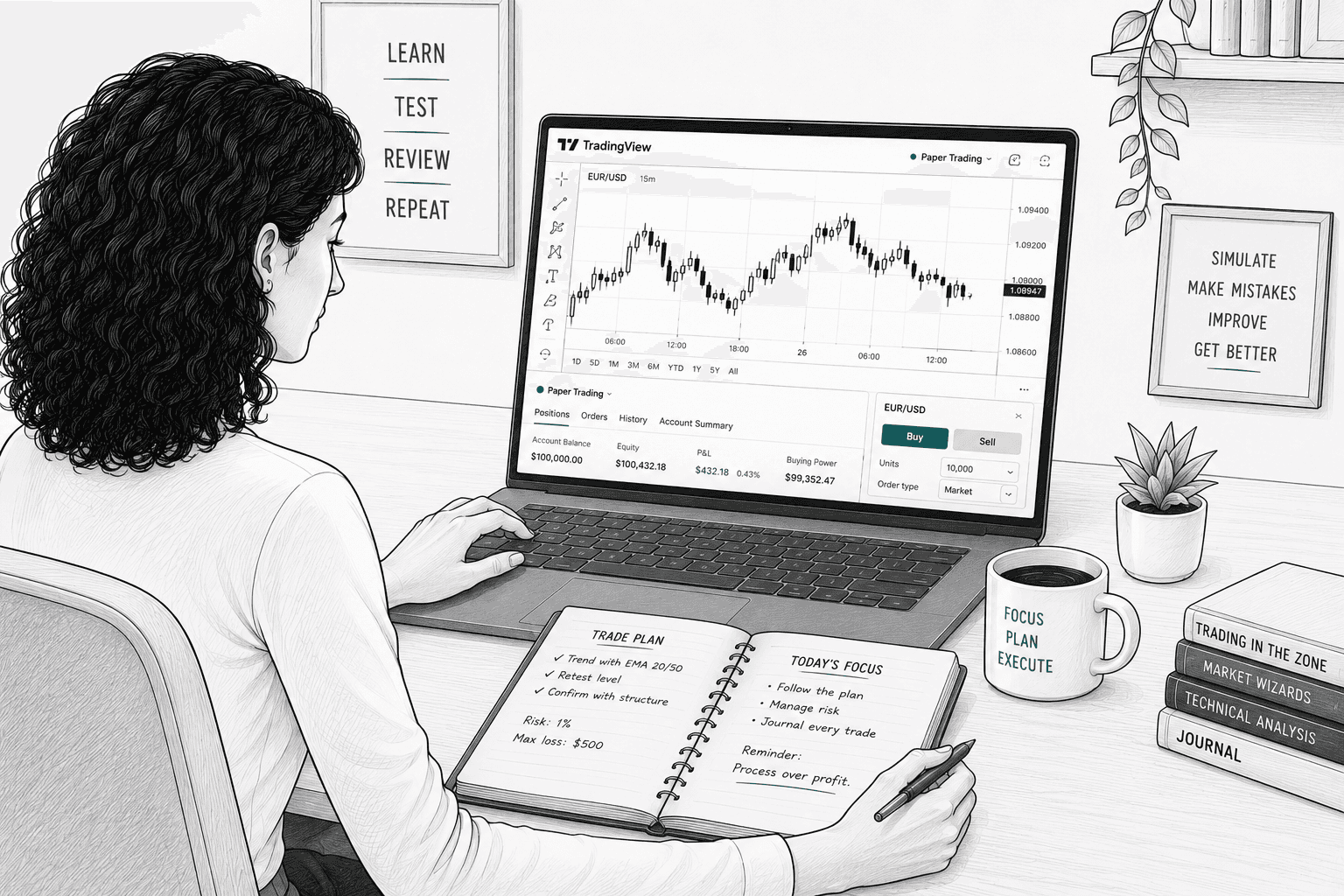
Paper trading means practicing trades with simulated money before risking real capital. It's one of the most consistently recommended starting points for new traders, but it has real limitations that nobody mentions. Here's the full picture.
Date Published:
Read Time:
5
minutes

How to Set Up Your Paper Trading Workspace
Paper trading is practicing with fake money (making trades as if they were real, recording results, and learning what works without any actual financial risk). It's the training simulator of financial markets.
Date Published:
Read Time:
5
minutes
Why Paper Trading Is More Than "Fake Trading"
Paper trading has an image problem. Used honestly, it's a sandbox for making your expensive beginner mistakes while they're still free.
Date Published:
Read Time:
6
minutes

Your First Week Paper Trading (What to Expect)
Your first week in a trading platform is genuinely disorienting. Prices move in ways that don't match what you read. Decisions that seem obvious in hindsight aren't obvious in real time. This is completely normal . Here's what to actually expect, so you can make the most of the learning curve rather than fighting it.
Date Published:
Read Time:
5
minutes
Read More Stage 1 Articles

The broker you choose affects your execution quality, your costs, the safety of your funds, and the instruments available to you. This isn't a decision to make by Googling "best forex broker" and clicking the first affiliate result. Here's what actually matters.
Updated on Jun 10, 2026

Trading culture sells an image of six glowing monitors. The honest list of what you need to begin is uncomfortably short, and that's good news.
Updated on May 21, 2026

Why the BabyPips School of Pipsology is the place to start learning about trading.
Updated on May 20, 2026